What factors contribute to high-quality early childhood services?
Feedback, social accountability, and local engagement play an important role
Authors



There is a trade-off in early childhood development services for families: Public services are often free and widely accessible but may struggle to provide quality. Private services, by contrast, may offer higher quality—but only to families who can afford them. This poses a challenge for low- and middle-income countries aiming to “ensure that all girls and boys have access to quality early childhood development, care and pre-primary education,” the target of Sustainable Development Goal 4.2. How can governments ensure equitable education and deliver high-quality services at scale?
“Public services are often free and widely accessible but may struggle to provide quality.”
We explored this question by studying Nicaragua’s efforts to expand early childhood development services.
From community centers to home visits
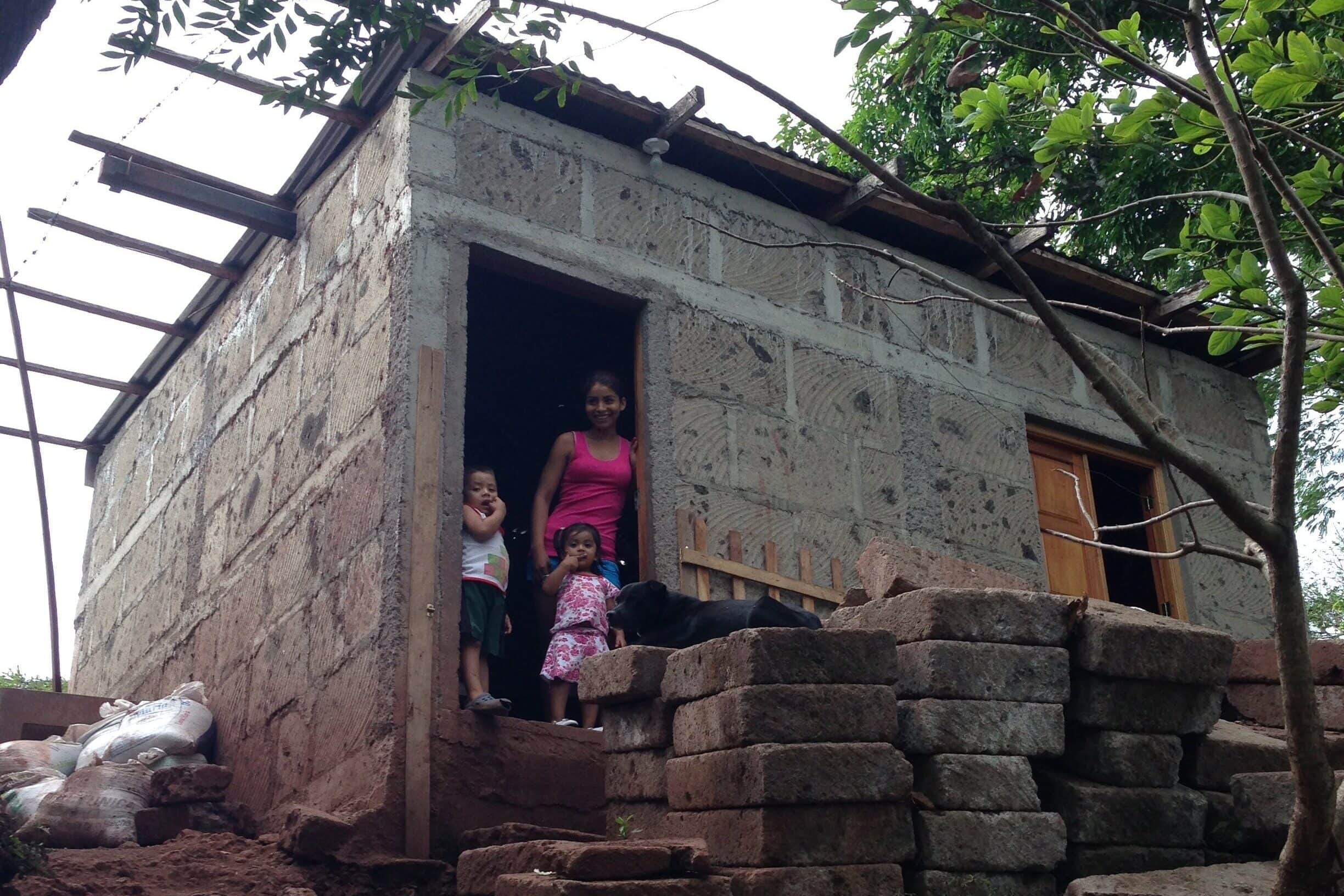
In the early 2010s, access to formal early childhood services in Nicaragua was extremely limited, particularly in rural areas. The Ministry of Family provided free services through Child Development Centers (Centros de Desarrollo Infantil; CDI), but those centers were located mainly in urban areas, and as a result, fewer than 5% of parents in rural areas sent their children to CDIs. Private early childhood centers and preschools were also primarily in urban areas and even less accessible, reaching fewer than 4% of families.
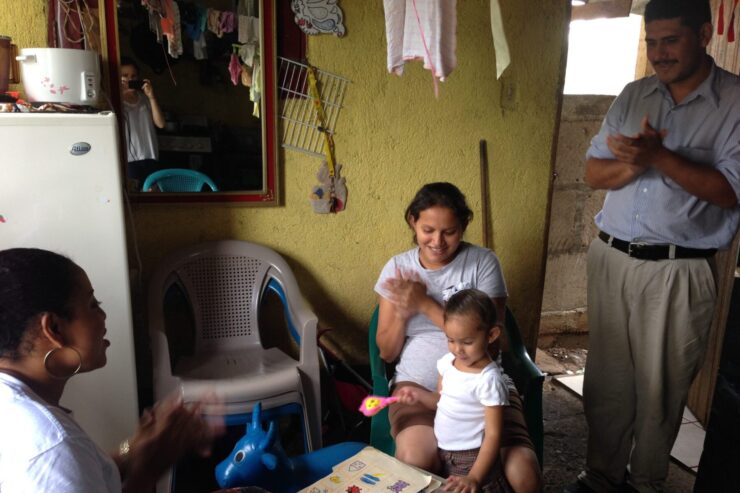
In response, the Nicaraguan government launched its Home Visit Program in 2013, led by the Ministry of Family. Children were supported in the family home, rather than in centers, by trained visitors who visited the families on a regular basis. The visitors were recruited locally, often from the same communities as the families they served, to ensure trust and cultural familiarity. They were required to live in the community. They had at least a secondary education and included community development workers, preschool teachers, teaching assistants, and community health workers. The visitors worked with caregivers to demonstrate age-appropriate activities, provide play materials, and encourage positive interactions between caregivers and young children.
The program was designed to reduce inequality in access to early childhood services, and initially served about 10,500 children in 140 communities. By 2018, it was reaching more than 33,000 children across 400 communities—including about 90% of the eligible population. Given the program’s rapid expansion, however, would the government be able to ensure that home visits were of consistently high quality?
Did the home visits meet quality standards?
In Nicaragua, observational assessments across three communities showed scope for improvement. For one thing, there was substantial variation in visit quality. In one community, for example, two home visitors simply read the program booklet verbatim, rather than engaging the child in developmentally appropriate activities.
In response the government, in tandem with the Inter-American Development Bank team, tested two approaches to monitoring home visits. Government officials made phone calls and visited homes about twice a year to determine whether visits were happening, how often, and how many home visitors were active.
In addition, half of the communities were randomly chosen to participate in a low-cost community feedback initiative, which allowed for a fair comparison of the two approaches. Families and local leaders observed service quality and were given structured opportunities to provide feedback as a way of promoting accountability and motivating the home visitors. Local councils received one day of training, learning how to collect, summarize, and discuss feedback from families.
During information sessions, families learned the purpose of home visits, what high-quality visits look like, and how to share their experiences. Every two months, community members and youth volunteers compiled the feedback and shared the results in community meetings that included families, home visitors, and local leaders. These meetings allowed for discussion, recognition of good performance, and problem-solving.
Community feedback led to more productive home visits
Home visits in communities that were able to give and act on feedback proved to be of higher quality. Caregivers were more engaged, home visitors used materials as intended, and the visits were structured more effectively. The content was aligned with children’s development, and visits occurred as designed in terms of duration and frequency. As a result of these quality improvements, caregivers began to provide more cognitive stimulation to their children at home.
“Home visits in communities that were able to give and act on feedback proved to be of higher quality.”
Compared with other communities, the home visiting program that provided opportunities for feedback increased child development scores, especially in language, fine motor skills, and behavior. The children were also more likely to complete preschool. Higher-quality delivery was closely linked to these improvements in child development outcomes.
Our study of Nicaragua shows that quality depends not only on technical training or centralized oversight, but also on feedback, social accountability, and local engagement, and it affects children’s developmental outcomes.
“Families were not just beneficiaries; they also became active participants in shaping service quality.”
The community feedback approach complemented government efforts by creating a regular, visible, and local feedback loop. Families were not just beneficiaries; they also became active participants in shaping service quality. This approach offers practical guidance for other countries seeking ways to expand access to early childhood services while maximizing quality.
Authors
Footnotes
We are grateful to specialists from the Inter-American Development Bank—particularly Emma Monin, Meri Helleranta, and Leonardo Pinzon—who led and oversaw the implementation of the program in Nicaragua. And thanks to the families and children who were part of the study.