The developmental psychologist and economist seeking to build children’s resilience in the face of global challenges
What promotes human development and equity?
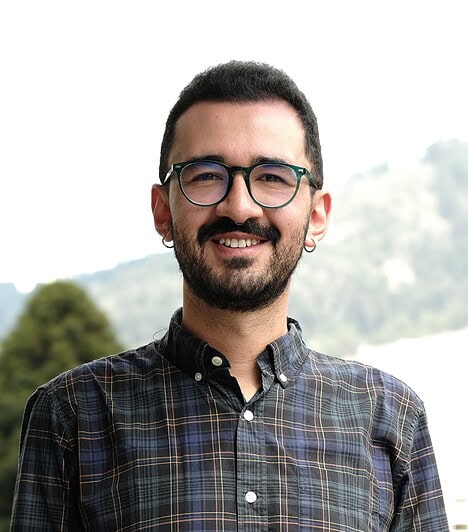
Interviewee:
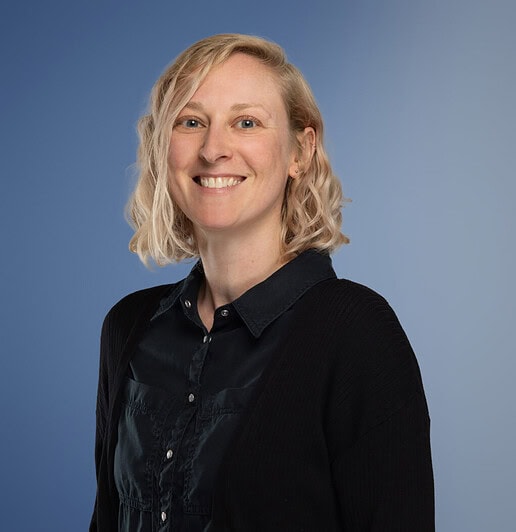
Interview by:
Jorge Cuartas studies how children develop under conditions of adversity, and what families, communities, and governments can do to help them thrive. Annie Brookman-Byrne finds out more.
Annie Brookman-Byrne: What drew you to study children’s development and adversity?
Jorge Cuartas: I grew up in a low-income household in Bogotá, Colombia, where I witnessed extraordinary resilience alongside profound inequality. I wondered why some children flourish despite adversity, while others face persistent barriers that limit their opportunities. That question eventually led me to study both economics and psychology to gain a more comprehensive picture of how children’s lives unfold within their environments.
In the course of my career, I have become increasingly convinced that the greatest advances come from working across multiple disciplines and in partnership with policymakers and practitioners, rather than studying problems from a distance.
Annie: How do you bring together psychology and economics in your research?
Jorge: My work focuses on four interconnected areas: preventing violence against children, strengthening parenting and early childhood development, understanding how environmental factors such as poverty, violence, and climate shape development, and designing and evaluating programs and public policies that can improve children’s lives.
I have always believed that research should not just explain problems, but help to solve them. That is why I work closely with governments, international organizations, and communities to co-design interventions that are scientifically rigorous, culturally relevant, and feasible to implement in real-world systems. My goal is to produce evidence that not only advances basic science but also informs policies capable of reaching millions of children and families.
“I have always believed that research should not just explain problems, but help to solve them.”
Annie: How will your research help children?
Jorge: Children today face an unprecedented combination of challenges, including violence, poverty, forced displacement, growing inequalities, and the accelerating impacts of climate change. These threats rarely occur in isolation; rather, they interact across developmental stages and generations. I believe that our scientific approaches must become equally interconnected.
Through my research, I seek to identify practical, scalable solutions that strengthen children’s developmental environments. One example is Programa Apapáchar, a parenting intervention that I co-designed with research colleagues and the Colombian government. Our intervention aims to promote nurturing care for children, including protection from violence, opportunities for early learning, and active engagement of the multiple caregivers who play important roles in children’s lives. Apapáchar is a 12-week hybrid program combining WhatsApp-delivered digital content with in-person sessions held in addition to existing government-sponsored family meetings.
Rather than creating programs that remain confined to research studies, we embed interventions within existing public systems so they can be sustained and scaled over time. Programa Apapáchar has become a national policy with the potential to reach more than 2 million children under the age of five in Colombia, after a randomized trial with 2,500 caregivers demonstrated positive impacts and cost-effectiveness.
Annie: Have you changed how you conduct your research over time?
Jorge: Perhaps the biggest lesson I have learned is that the people closest to a problem are often closest to its solution. Early in my career, I thought primarily about identifying causal effects and producing rigorous evidence. While those goals remain essential, I now spend just as much time listening to and working with parents, practitioners, policymakers, and community leaders.
This has fundamentally changed how I conduct research. I increasingly work through long-term research-practice partnerships in which communities and decision-makers help shape the questions we ask, the interventions we design, and the way we interpret findings. This approach has also influenced my teaching. I encourage students to think beyond statistics and ask whether their research is useful, culturally grounded, and capable of improving people’s lives. For me, the highest standard of scientific excellence is achieved through theoretical grounding coupled with methodological rigor and real-world relevance.
“Perhaps the biggest lesson I have learned is that the people closest to a problem are often closest to its solution.”
Annie: What ideas are you pursuing next?
Jorge: I am excited about three directions. First, I want to better understand how climate change is becoming a developmental issue. Rising temperatures, environmental disasters, and ecological degradation affect children’s physical and mental health. But we know relatively little about the mechanisms involved or how families and communities can build resilience. I aim to better understand which climate hazards affect children’s development and through what processes, which children are most affected, and when during their development the effects are most pronounced.
Second, I hope to continue advancing the science of implementation and public policy to expand evidence-based parenting and early childhood programs across Colombia and Latin America. While many interventions are effective under controlled conditions, far fewer have made a meaningful impact on a population through government systems. I want to understand how interventions can be adapted without compromising effectiveness and how implementation quality can be maintained at scale. How can behavioral science, implementation science, and economics inform policies that are both effective and sustainable?
Finally, after two fulfilling years as an Assistant Professor at New York University, I am excited to continue building the CARE Lab (Catalyzing Action for Resilient Ecologies), now as an Associate Professor at Universidad de los Andes in Colombia. CARE brings together psychology, economics, public health, implementation science, and environmental sciences to generate evidence that is both scientifically innovative and socially transformative.
I hope to contribute to mentoring the next generation of social scientists, encouraging them to use interdisciplinary frameworks, methods, and collaborations not only to address global challenges, but also to build resilience, strengthen relationships, and promote human development. My hope is that CARE will become a platform where researchers, governments, practitioners, and communities work together to develop solutions that allow children to thrive in an increasingly complex and rapidly changing world.