Where is AI in education heading?
Three lessons learnt from two years of interviewing experts

Author
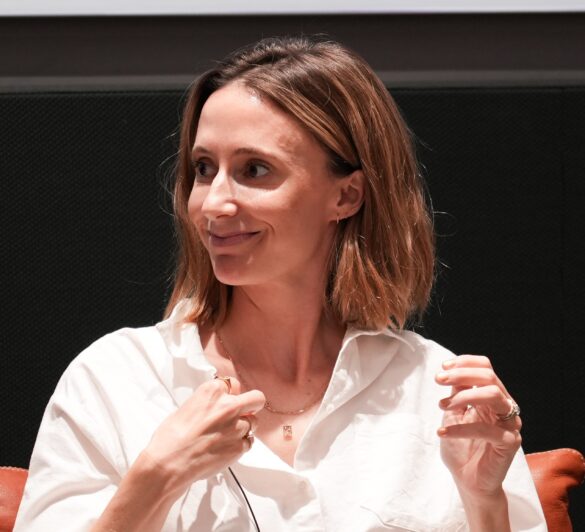
For the past two years, AI researcher Owen Henkel and I have interviewed researchers, practitioners, and educators for the EdTechnical podcast. We started the podcast to help educators sift useful insights from the AI hype. We figured the best way was to ask people who actually know what they’re talking about. Two years and dozens of conversations later, here are three lessons that have shaped my thinking on AI in education.
Even the experts don’t know what’s coming
One of the most humbling things about these interviews is watching genuinely knowledgeable people grapple with uncertainty. They aren’t being coy or hedging for political reasons. They simply don’t know how AI is going to play out.
“One of the most humbling things about these interviews is watching genuinely knowledgeable people grapple with uncertainty.”
Our very first guest, Daisy Christodoulou MBE, Director of Education at No More Marking, is one of the sharpest thinkers on assessment in the UK. Daisy was sceptical about generative AI’s educational applications. She said it’s too error-prone, too unreliable. Two years later, back on the show, her view had shifted. Falling model costs and better reliability had opened up possibilities she hadn’t expected. She was more optimistic, though still appropriately cautious about where human judgment remains essential.
We’ve also had guests from Google and DeepMind who are building some of the most advanced AI systems in the world. Even they don’t know what to expect from new developments. When the people at the very heart of this technology are uncertain about where it’s heading, the rest of us should probably hold our confident predictions a bit more loosely!
This is partly why we created the EdTechnical AI Education Forecasting Competition. We are cutting through the hype-versus-doom debate and creating a space for specific predictions about AI in education. The competition closes on 16 December, with $25K in prizes, and our goal is to promote careful thinking overconfident hot takes.
The evidence doesn’t necessarily match the headlines
Several guests have challenged headline narratives that seem like consensus. Candice Odgers, a developmental psychologist who’s studied teen mental health for over twenty years, pushed back on the idea that social media is causing a mental health epidemic. She pointed to the gap between what the data shows and what prominent figures like Jonathan Haidt claim. Candice doesn’t say that screens are harmless. But she says we’re rushing toward restrictive policies without good evidence, potentially missing more effective interventions.
I took a broader lesson from that conversation: we’ve been here before. Adults have always worried about young people and new technology. Sometimes those worries are justified, sometimes not. The responsible approach is to look carefully at the evidence rather than letting fear drive policy. That applies to AI as much as to social media.
“The responsible approach is to look carefully at the evidence rather than letting fear drive policy.”
What works isn’t always what happens in schools
Becky Allen, co-founder of Teacher Tapp, learns from thousands of teachers every day through her surveys. But her own teaching experience gave me a different insight.
Personalisation has been a promise of EdTech for decades, and AI has intensified the hype. But this isn’t new. Becky was involved in a personalisation programme years before anyone was talking about large language models. The programme worked, students liked it, and the outcomes were good.
But the programme was discontinued because teachers felt it undermined their professional judgment. They may have been right to push back. If a tool changes what it means to be a teacher in the classroom, that’s not a minor implementation detail. It’s a fundamental question about what education looks like.
“The question isn’t just whether a tool works, it’s whether it fits into the reality of schools.”
For anyone who gets excited about the potential of AI in education, the question isn’t just whether a tool works, it’s whether it fits into the reality of schools, including how teachers understand their own role.
Two years of conversations have made me no more certain about where AI in education is heading. If anything, I’m more comfortable with uncertainty. But I do feel confident that the people who’ll navigate this well are asking careful questions, looking at evidence, and staying humble about what they don’t know.
Author