Que faire lorsque votre enfant est physiquement agressif ?
How families can grow together through conflict
Auteurs



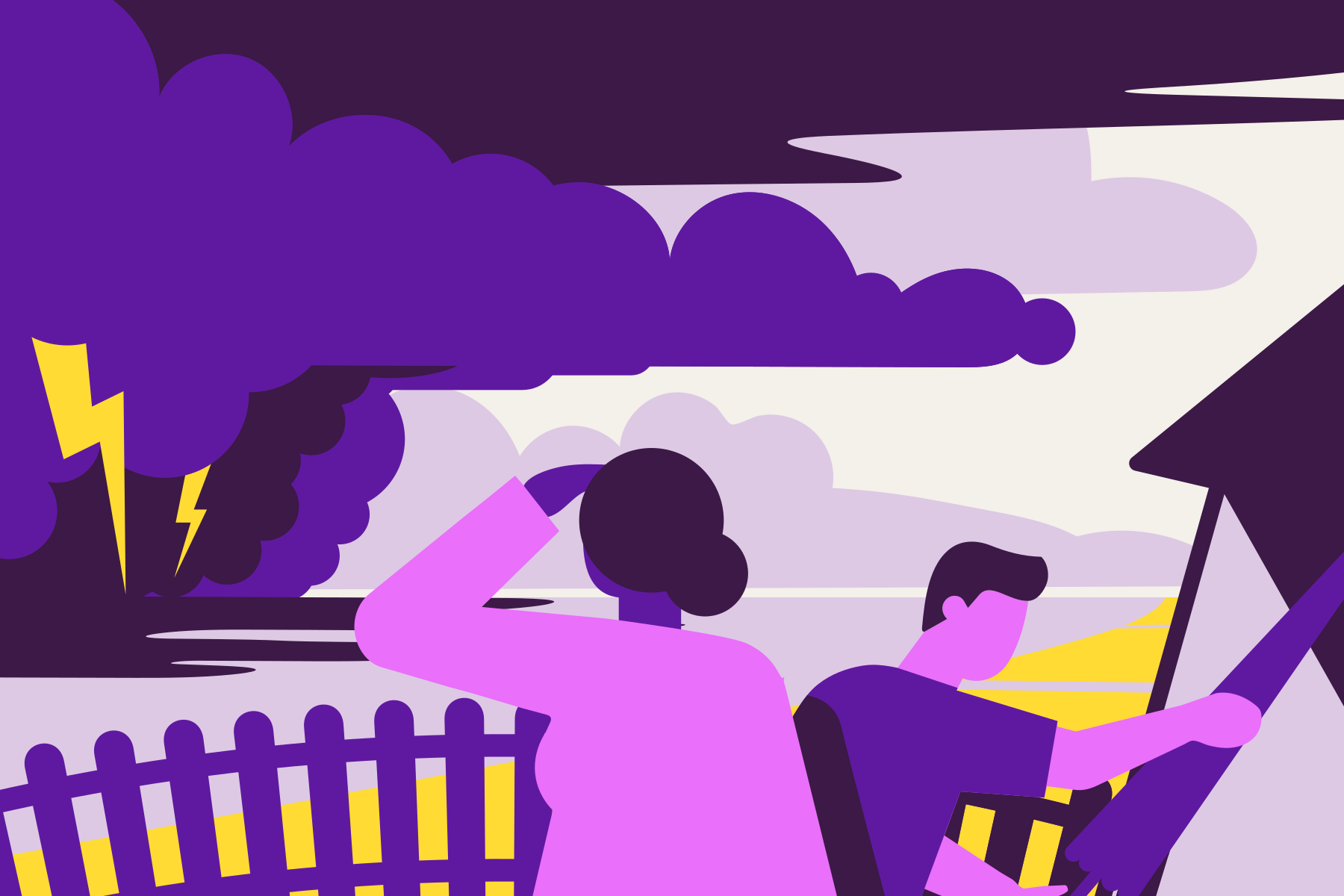
Conflict is a normal part of family life. But when it escalates into physical aggression, it can cause serious damage. Just as we might prepare for a thunderstorm, we can prepare for the storms in our homes to reduce future harm.
Homes should be safe places
Children have the right to grow up free from violence. Yet in many families, conflict escalates and children become physically aggressive toward parents, caregivers, or siblings: shouting, insulting, spitting, kicking, hitting, or throwing things.
This can be frightening and confusing for parents and caregivers as well as a source of shame, especially because research and public debate se concentrent souvent sur violence contre les enfants, not on children’s aggression toward their parents. Much violence in families, whether against children or parents, happens in households already marked by stress, harsh punishment, and intergenerational experiences of violence.
Impulsivity and aggression over the course of development
In early childhood, many children hit, bite, kick, or throw things before they have the language and self-regulation to manage their frustrations appropriately. For most children, these behaviors become less frequent over time as they develop impulse control, emotion regulation, and social understanding.
Adolescence, however, can be a new phase of vulnerability. It is a time when relationships with parents are renegotiated, emotions are often intense, and impulses may be stronger than the skills needed to regulate them. Physical aggression toward parents increases from age 11 to age 13, a period in which impulsivity, conflict, and behaviors such as arguing, defiance, or rule-breaking can intensify. Aggression tends to decline later in adolescence.
“In early childhood, many children hit, bite, kick, or throw things before they have the language and self-regulation to manage their frustrations appropriately.”
Aggression within families has complex roots
Like thunderstorms, aggressive eruptions in families rarely come out of nowhere. They usually develop over time, caused by a variety of factors.
One such factor is a child’s characteristics and developmental stage: children are more likely to become violent if they tend to act impulsively, take risks, struggle to stay focused, lack self-control, or find it hard to manage strong feelings and calm down when angry or frustrated.
Parental factors also play a role. Chronic parental stress and burnout can leave parents exhausted, emotionally distanced, and feeling ineffective. Parents’ propres expériences of harsh or violent parenting in childhood can shape how they respond under stress, especially when stress levels are high. Moreover, frequent, intense, and poorly resolved conflict between parents often leads to harsher, less responsive parenting, which can have an adverse impact on child behavior.
“When parents are aggressive toward their children, it is rarely because they want to cause harm. Usually they are overwhelmed, frightened, and lacking a workable strategy for responding in that moment.”
Outside the family, children may face agression such as bullying at school, while families may be under strain owing to financial pressures, lack of resources, or limited access to support. When multiple factors come together, a minor everyday conflict can turn into a storm. This can be especially challenging for familles d'enfants neurodivergents, who may need additional support with managing sensory overload, transitions, communication, or strong emotions.
A trauma-informed response to family aggression
A formée par Trauma Center for Trauma Sensitive Yoga, Pays-Bas (TCTSYN) pour travailler en tenant compte des traumatismes divers and trauma-sensitive approach can help, because aggression is not always simply a matter of deliberate defiance. Stressful, frightening, or unpredictable experiences can shape how children respond to conflict.
Instead of asking only “How do we stop this child’s behavior?” we should ask, “What is this behavior expressing, what has this child learned about conflict, and what can help everyone feel safe?” This does not mean excusing violence, but simply recognizing that aggression can sometimes stem from difficulty managing strong emotions and impulses and reflect learned ways of responding to conflict.
“What is this behavior expressing, what has this child learned about conflict, and what can help everyone feel safe?”
When parents are aggressive toward their children, it is rarely because they want to cause harm. Usually they are overwhelmed, frightened, and lacking a workable strategy for responding in that moment. But children must be protected from violence, and parents need support so that they can respond safely when they are being shouted at, threatened, kicked, or hit.
How to respond to family conflict
1. Before a conflict occurs: notice patterns
Identify the situations in which tension tends to build, such as fatigue, transitions, shame, school stress, sensory overload, sibling conflict, or recurring power struggles. Children who struggle with impulsivity or attention and self-regulation difficulties often need more co-regulation: support from a calm adult to help them manage strong feelings.
Adults should speak quietly, name the feelings, and perhaps suggest taking a break together before addressing the problem. In the case of neurodivergent children, it is important to be aware of sensory triggers, unexpected changes, communication demands, and the need for recovery time after school or other demanding situations. Quality time and greater la participation des parents in a child’s day-to-day life can also help prevent aggression within families.
2. During and shortly after conflict: safety first
If your child is hitting, kicking, spitting, or throwing objects, focus on safety first. Create distance, remove siblings from the situation, and avoid responding physically. A highly aroused child cannot learn in the middle of the storm, and neither can an overwhelmed parent, so both need to regulate their emotions before trying to talk.
When the moment has passed, focus on preventing a second wave. Avoid responding to aggression with aggression, humiliation, or harsh punishment, because such reactions can lead to more violence over time. Instead, allow both sides to settle down. Use a quiet voice, remove stimulation, take a break, offer a glass of water, help your child breathe or move, or simply give them space.
3. When things have calmed down: repair and reflect
Only when everyone is calmer is it useful to talk about what has occurred. Repair your connection by naming what happened, acknowledging feelings, and thinking together about what might help next time: “What was hard just before this started?” or “What can we do differently when you feel this angry?” Rebuild trust, stay involved in your child’s everyday life, and build good conflict‑coping skills to help protect against repeated aggression.
4. Look for help
If aggression continues in your family, it is a sign that you need more support and strategies. Seek help from outside the family, especially if incidents become more frequent, intense, or frightening, or if you feel close to losing control. Your first steps might include talking to a pediatrician or finding school-based support or a clinic offering child and adolescent mental health services.
Growing together after conflict
Once you have learned to recognize the patterns that lead to physical aggression, you will be able to act more quickly. Over time, you may feel empowered to handle each crisis more safely, calmly, and effectively. The storms may not disappear, but they may become shorter, less damaging, and easier to navigate.
Auteurs