The economist tackling the global learning crisis
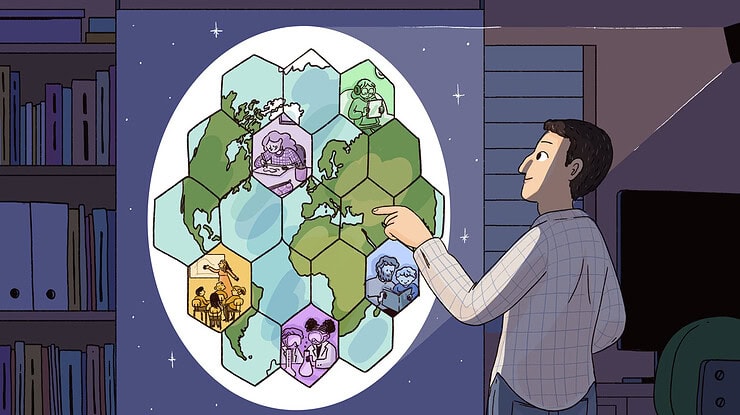
Noam Angrist evaluates what works in education systems around the world
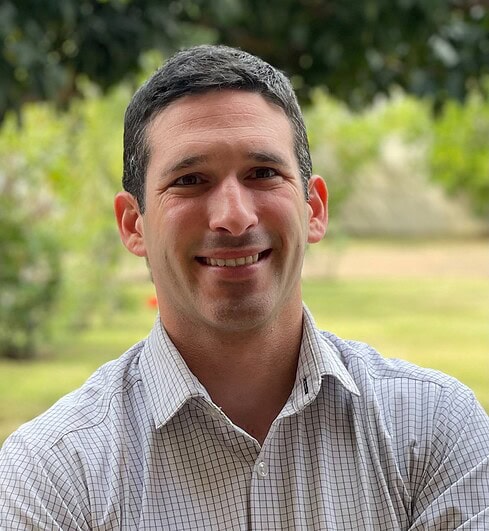
Interviewee:
Interview by:

Many children are in school but learning little. Noam Angrist wants to scale up solutions that are proven to work, so that all children can learn. Aisha Schnellmann finds out more.
Aisha Schnellmann: What are you studying, and why?
Noam Angrist: There is a global learning crisis, with many children learning little despite attending school. In a recent paper, we showed that student learning had barely improved at all over the past few decades. At the same time, we have growing evidence on “what works” to improve learning. For example, randomized trials show that teaching to the individual level of the child is more effective than teaching a one-size-fits-all curriculum to a whole class. Some of the most cost-effective interventions, such as simple diagnostic assessments and teaching to small groups at the appropriate level, produce the equivalent of three years of high-quality education for as little as $100 per child.
“Teaching to the individual level of the child is more effective than teaching a one-size-fits-all curriculum.”
Now the challenge is to scale solutions like those so they reach as many students as possible. In my research, I systematically study the scale-up and implementation process to ensure “what works” gets implemented by governments to achieve quality learning for all children.
AS: Why is scaling up these solutions such a big challenge?
NA: Both scale and implementation remain loosely defined and understudied. We found that fewer than 20% of studies quantify and account for implementation. We need more implementation measurement tools to tell us who is delivering the program and how closely they are following the specified approach, for example. Quantifying these factors will help us understand in which circumstances interventions work best.
In addition, we need more iterative and adaptive learning methodologies, such as A/B testing, to integrate ongoing learning into the implementation process. A/B testing involves comparing two versions of a learning program to see which improves children’s learning more. We recently conducted 12 randomized A/B tests at Youth Impact – an NGO we founded to scale-up and continually improve evidence programs – in rapid succession. Our goal was to make tutoring – one of the most effective, yet hard to scale, approaches – substantially more cost-effective. We found large efficiency gains – up to 30% per test – in implementing this approach, which both reduces costs and enhances effectiveness.
We will be posting a set of resources on implementation measurement and implementation science methodologies and frameworks on the What Works Hub for Global Education website. These resources are free to use and open to contributions.
“Nearly 90% of primary school children are in school around the world, yet large learning gaps persist.”
AS: What exciting work is happening now?
NA: The pendulum is swinging from a focus on schooling for all to learning for all. For years, the international education community has focused on getting kids into school. Now, nearly 90% of primary school children are in school around the world, yet large learning gaps persist. Over 70% of children in low- and middle-income countries are in learning poverty, according to the World Bank. Even at age 10, those students cannot read and comprehend a simple story. While the learning crisis is severe, there are already some success stories. For example, India is starting to improve learning at scale after decades of stagnation. More and more countries are on this path, which is very exciting.
Footnotes
Noam Angrist is the Academic Director of the What Works Hub for Global Education. His interests focus on bridging the gap between evidence on ‘what works’ to enable young people to thrive and translation into scaled intervention and policy. He is the co-founder of Youth Impact, which he founded to scale and test proven programs in health and education.
His research includes primary research on programme and policy effectiveness via randomised trials and natural experiments, building global databases and public goods, and synthesising evidence to inform policy.
He has consulted for the World Bank Chief Economist, FCDO’s Chief Economist, and led key aspects of the development of the World Bank Human Capital Index education pillar. Noam further led the development of UNICEF’s evidence menu for the Foundational Literacy and Numeracy Hub (FLN) hub in partnership with the Abdul Latif Jameel Poverty Action Lab (J-PAL). He also led the academic research underpinning the inaugural report of the Global Education Evidence Advisory Panel.
Noam has a BS in Mathematics and Economics from the Massachusetts Institute of Technology (MIT) and a doctorate (DPhil) from the Blavatnik School of Government, University of Oxford. Noam is a 2024-2026 Jacobs Foundation Research Fellow.
Interviewee:
Interview by: