The public health researcher asking what families need
What makes a healthy environment for children’s development?
Intervistato:

Intervista di:
Marilyn Ahun studies children’s early environments and how they impact children’s development and mental health over time. Annie Brookman-Byrne finds out more.
Annie Brookman-Byrne: Quali domande ti poni nella tua ricerca?
Marilyn Ahun: How and why does parental mental health influence child and family wellbeing? Parental mental health is one of the strongest predictors of child development and mental health. I study the mental health of parents when their children are in the first few years of life because the foundations for almost every aspect of human development are laid in early childhood. Understanding family processes during this period can tell us more about how people develop and change over time. Importantly, I want to identify how we can best intervene to support healthier outcomes for children.
Annie: What drew you to study these questions?
Marilyn: I became a scientific researcher because I wanted to use science to help people. As the eldest daughter and granddaughter in my family, I grew up taking care of younger siblings and cousins and was always fascinated by how children’s environments influenced their development.
I decided to study developmental psychology during my undergraduate studies, with the initial plan of becoming a clinical psychologist. As I embarked on this path, I became more interested in taking a broader public health approach, focusing on how to improve family environments at the population level, rather than at an individual level. I was drawn to public health’s emphasis on working with families, community members, researchers, and policymakers to promote health. Through a PhD in public health, I learned to conduct qualitative, quantitative, and intervention research, engage in meaningful community partnerships, and connect with international organizations and government agencies invested in early childhood development.
“Parental mental health is one of the strongest predictors of child development and mental health.”
Annie: How will your research help children to thrive?
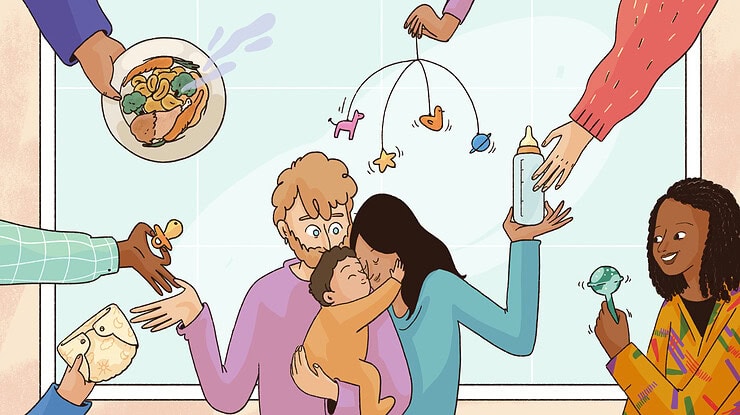
Marilyn: My research sheds light on how to provide a healthier home environment, one in which caregivers have the necessary support to engage in stimulating parenting practices while also taking care of their own mental health. For example, I have examined the role of the proverbial villaggio in supporting child and family wellbeing. The support of extended family members and neighbors can help parents navigate the stresses of caring for their families, while the active involvement of educators, older siblings, and community members in children’s lives enables parents to learn from and lean on people they can trust in difficult times. This support allows caregivers to care for themselves and support their children in meeting important developmental milestones, and it lays the foundation for better health, social, and educational outcomes.
Annie: How has your research approach changed?
Marilyn: I was trained in a research environment that primarily valued knowledge generation. I worked toward that goal with the hope that someone would one day take that knowledge and use it to improve lives. Over the years, I have come to appreciate the importance of directly engaging with families as a core part of the research process. Rather than simply analyzing data and publishing findings in academic journals, I have learned to use research as a means to better understand families’ needs. This allows me to ensure that my work is directly relevant to the communities I work with. I have also become more actively involved in sharing my research not only with the scientific community, but also with the local communities involved and with clinicians and policymakers.
Annie: Quali sono le prospettive per te?
Marilyn: I am very excited to understand how to optimize mental health interventions within existing health and social systems. There are many services and interventions out there, but we do not always know whether they effectively improve mental health outcomes, nor do we understand how they function within a given system. Over the past few years, I have been collaborating with non-governmental organizations, clinicians, and policymakers to better understand the functioning and impact of mental health interventions within Ghana’s sistema di salute mentale. I also contributed to drafting Ghana’s first-ever Maternal Mental Health Policy, which aims to improve perinatal mental health services. I look forward to continuing my efforts to gain a better understanding of how these interventions are impacting parents and young children.
Le note
Marilyn N. Ahun è professore assistente presso il Dipartimento di Medicina dell'Università McGill e ricercatore principale presso l'Istituto di Ricerca del Centro Sanitario dell'Università McGill. Dopo aver conseguito una laurea con lode in Psicologia at Presso l'Università McGill, ha conseguito un dottorato di ricerca in Sanità Pubblica. at École de Santé pubblico de l'Université da Montreal, e una borsa di ricerca post-dottorato in salute globale. at Scuola di Sanità Pubblica TH Chan di Harvard. La sua ricerca esamina in che modo l'ambiente della prima infanzia influisce sulla salute mentale di bambini e adolescenti, di cui come possiamo ottimizzare interventi e servizi per promuovere la salute mentale nel corso della vita. Marilyn è un 2026-2028 Borsista di ricerca Jacobs presso il CIFAR.
Marilyn on LinkedIn ea McGill University.
Questa intervista è stata modificata per maggiore chiarezza.