Donner aux futurs les moyens de réussir grâce à un apprentissage fondamental
How improving underprivileged children’s math and reading skills can have lasting benefits for society
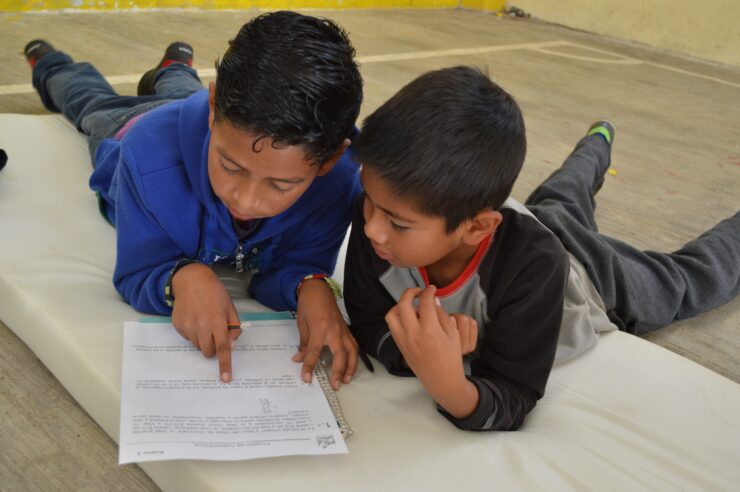
Interviewé:
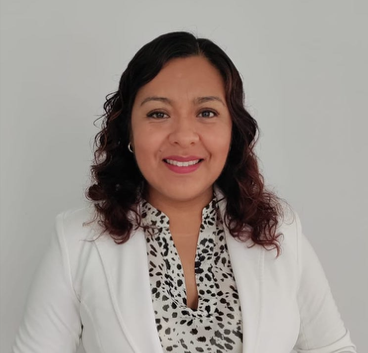
Interview par :

Stimuler compétences fondamentales helps children gain the tools they need for life, says Anabel Velásquez Durán of Medición Independiente de Aprendizajes. Anabel talks with Aisha Schnellmann about how strengthening the math and reading skills of children in underprivileged communities in Latin America can have a cascading impact on society.
Aisha Schnellmann : Quels sont les plus grands défis auxquels sont confrontés les enfants à l'échelle mondiale, ainsi qu'en Amérique latine et dans les Caraïbes ?
Anabel Velásquez Durán : La crise mondiale de l’éducation est devenue de plus en plus critique. Selon UNESCO, over 617 million children worldwide struggle to read simple sentences or perform arithmetic calculations. The pandemic has intensified the crisis, especially in regions like Latin America and the Caribbean, where learning poverty – the inability to read and understand a simple text by age 10 – was devrait augmenter de 52% dans 2019 à 79% dans 2022.
In Mexico, the pandemic hit students hard. Notre étude récente Les résultats ont montré que le nombre d'enfants de 10 à 15 ans capables de lire des textes simples a chuté de 75 % en 2019 à 58 % en 2021, et que la proportion de ceux capables d'effectuer des calculs mathématiques de base, comme la soustraction de nombres à deux chiffres, est passée de 70 % à 40 %. Les enfants issus de milieux socio-économiques défavorisés ont été les plus touchés, avec des pertes importantes en lecture et en mathématiques.
Latin America continues to face a number of education challenges, from limited access to early and higher education to a persistent gap in both opportunities and quality.
These children face the tough challenge of catching up on basic skills, overcoming poverty, and recovering from learning loss to stay on track in their education.
COMME: De quoi les enfants ont-ils besoin pour s'épanouir ?
AVD: Children need more effective ways to help them catch up quickly on essential skills and prevent further learning loss, including access to targeted programs that focus on strengthening literacy and mathematical skills.
I believe there are three key actions that the educational community can take to help children overcome this learning crisis. First, we need to use assessments to identify the extent of the problem, track progress, and measure results, using reliable tools. Second, we need to create and apply innovative approaches to help children strengthen their foundational skills in reading and math as well as life skills, ensuring that education is tailored to their individual needs. Third, we need to encourage the larger community and the educational system to get involved by teaching skills and closely monitoring progress.
It is also important to continue researching what helps or hinders learning, strengthen early primary education with a focus on literacy, and set up systems to diagnose problems and offer early support.
“We need to create and apply innovative approaches to help children strengthen their foundational skills in reading and math as well as life skills.”
COMME: Comment se déroule le travail de Medición Independiente de Aprendizajes (MIA) promoting children’s learning and development?
AVD: Our educational innovations like MIA Learning Camps ont fait une vraie différence, helping children in primary school achieve the equivalent of one year of progress in reading and two years in math. The MIA Reading Camps aim to improve communication skills and reading comprehension at different levels: literal, inferential, critical, and evaluative. The general objective of the MIA Math Camps is to develop basic logical-mathematical skills in children and adolescents through diversified activities that allow them to improve their learning in a framework of collaboration and creativity.
En renforçant les compétences fondamentales, MIA aide les enfants à acquérir les outils dont ils ont besoin dans la vie, tout en augmentant la valeur accordée à l'éducation dans la société, en améliorant la mobilité sociale et en ayant un impact positif sur les inégalités.
Nos outils de mesure et nos innovations pédagogiques sont désormais largement utilisés dans divers contextes scolaires, contribuant ainsi à des améliorations durables des systèmes éducatifs.
COMME: Qu'est-ce qui vous a inspiré dans ce travail ?
AVD: I am inspired by the degree to which our educational innovations have scaled up. MIA now plays a key role in influencing educational policy and practice. We are currently providing valuable insights and recommendations to support the Mexican government’s learning recovery efforts.
It is remarkable how well-planned, evidence-based solutions and educational innovations are able to address rising inequality, restore the value of education, improve learning outcomes, and raise public awareness about the importance of education.
« Ma vision de l’avenir est celle d’un monde où chaque enfant possède les compétences nécessaires pour s’épanouir et a accès à une éducation de haute qualité. »
COMME: Quelle est votre vision pour les enfants dans le futur ?
VD: My vision for the future is a world in which every child has the skills needed to thrive and access to high-quality education. I also hope to see a society that is actively involved in education and using proven methods to support lifelong learning.
Interviewé:
Interview par :
Notes
Anabel Velásquez Durán est titulaire d'un doctorat en systèmes et environnements éducatifs, d'une maîtrise en éducation virtuelle et d'une licence en systèmes informatiques administratifs. Chercheuse à l'Institut de recherche en éducation de l'Université Veracruzana et chercheuse postdoctorale au CIESAS (CONAHCyT), elle est directrice générale de la Mesure indépendante des apprentissages pour le programme MIA. Ses recherches portent sur l'apprentissage médiatisé par les technologies et les innovations pédagogiques. Elle coordonne des projets de recherche internationaux financés par la Fondation Hewlett, la Fondation Tinker, le Réseau PAL, le laboratoire SUMMA de la Banque interaméricaine de développement (BID), la Fondation Kellogg et l'UNICEF. Membre du Système national des chercheurs (SNI) et du Conseil mexicain de la recherche en éducation (COMIE), Anabel est l'auteure de plusieurs publications et possède vingt ans d'expérience professionnelle.
Anabel on ORCID
MIA Site Internet, et sur Facebook, X, Instagram, YouTube
Universidad Veracruzana (UV) and Centro de Investigaciones y Estudios Superiores en Antropología Social (CIESAS) Ces a finalist for the 2024 Klaus J. Jacobs Prix des meilleures pratiques, which recognize institutions and individuals working to implement evidence-based solutions aimed at promoting child development and learning in practice. Medición Independiente de Aprendizajes (MIA) is its special advocacy program.
Cette interview a été modifiée pour plus de clarté.