Why a child’s relationship with their teacher is so important
These relationships are the foundation for self-regulation, learning, and a sense of belonging for young children
Author

It’s the first day of preschool, and Ms. Sarah has prepared an engaging morning circle time. Most of the four-year-olds happily join in singing the welcome song, but Leo sits on the edge, looking anxious and unsure. When Ms. Sarah invites him to join the circle, he shrinks back.
Ms. Sarah is an experienced educator doing everything ‘right’, so what’s missing? A relationship. A personal connection has yet to be built between teacher and child. Without that foundation of trust and security, even the best teaching strategies may not reach every child.
A safe haven and secure base
Relationships are essential for learning and development. From infancy onwards, children grow and learn through interactions with the people around them. Long before children are able to manage their own emotions and behaviour, they rely on adults to help them do so. When caregivers consistently respond to children’s needs with comfort, support, and understanding, children learn that they are safe. Over time, this relationship becomes a safe haven, as children know they can return to a trusted adult when they feel upset. It also becomes a secure base from which children feel confident enough to explore the world independently.
When a child enters preschool, the teacher becomes an important new adult in the child’s life. Although teachers do not replace parents, they can provide a sense of safety during the school day, much as a parent might do. Teachers create a home away from home, offering children the security they need to explore, learn, and participate. When children feel emotionally safe with their teacher, they are more willing to ask questions, persist when tasks become challenging, and take the risks that learning requires. Children are more likely to engage with new experiences and benefit from instruction when they trust the teacher.
“Teachers create a home away from home, offering children the security they need to explore, learn, and participate.”
How relationships support learning
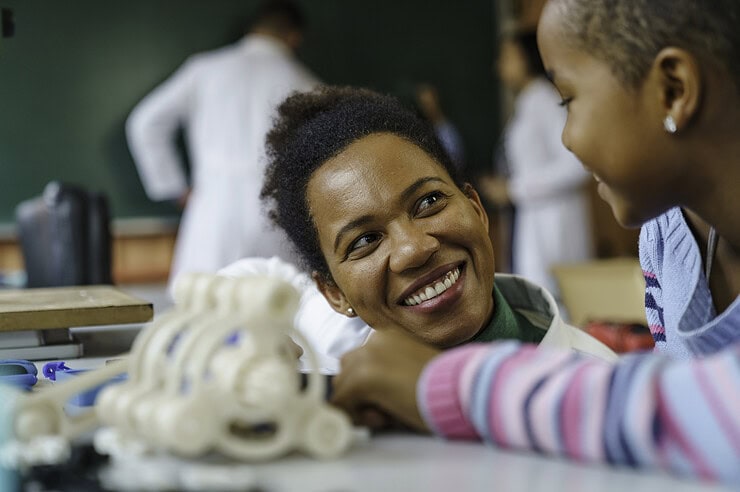
Relationships are built through many small, everyday interactions, like a warm greeting or a shared smile, that create the sense of trust children need to thrive.
From this warm and supportive relationship, children can engage with the world around them, which helps them develop self-regulation. Children who trust their teacher can devote their energy to paying attention, remembering instructions, controlling impulses, and adapting flexibly when situations change, rather than worrying about whether they are safe or supported. When teachers help children label emotions, calm down after frustration, wait their turn, or think through a problem, they are providing co-regulation. Over time, children internalise these strategies and become increasingly able to manage their own emotions, attention, and behaviour.
Through these warm, responsive relationships, children also learn to trust others, cooperate with peers, and navigate disagreements constructively.
Why relationships matter for equity
Not all children enter the classroom having had the same opportunities to develop the skills they need to succeed in school. Some children grow up in environments marked by stress, instability, a busy household, or limited access to enriching experiences – which can make the development of self-regulation and executive functioning more challenging. Struggles with self-regulation can lead to a negative cycle: The child may become disruptive or withdrawn, and adults may respond with frustration or punishment. In turn, the child feels even less safe, which further undermines learning and behaviour.
Moreover, experiences of instability or inconsistent caregiving can shape how children approach new relationships. They may find it harder to trust adults and to see teachers as sources of comfort, support, and security.
Fortunately, relationships can also create positive cycles. Sensitive teachers can help children develop a sense of trust and security, even when the children have experienced less supportive relationships elsewhere. A new relationship can help children develop positive expectations about what relationships can look like. A teacher’s warmth, responsiveness, and predictability help children engage with learning and access opportunities that might otherwise remain out of reach.
By building a secure, supportive relationship with every child, teachers can limit the extent to which differences in life circumstances become differences in opportunity.
“By building a secure, supportive relationship with every child, teachers can limit the extent to which differences in life circumstances become differences in opportunity.”
How to build relationships with children
The good news is that relationships grow through everyday interactions. Start by getting to know children as individuals. Greet children by name, learn about their interests, spend brief one-on-one moments together, and show genuine curiosity about their lives. All of these things communicate the message ‘you matter here’. For children who have experienced instability or unpredictable care, such consistent signals can help them begin to rebuild trust in adults and in school as a safe place.
Create positive interactions throughout the day, by noticing effort, highlighting strengths, engaging in child-led conversations or play, and creating opportunities for success. This allows children to experience their teacher as supportive and available.
Challenging moments, too, are important for relationships. When children become upset, support co-regulation by acknowledging emotions, helping them put feelings into words, and guiding them towards solutions. After a conflict, take time to repair the relationship. This can be just as important as addressing the behaviour that has led to the conflict, especially for children who are used to relationships rupturing without repair.
Relationships support good teaching
A few weeks after that first morning circle, Leo joins his classmates in singing the welcome song. Ms. Sarah has become a trusted adult. Through many small positive interactions, she has given Leo the secure foundation that allows him to participate, regulate his emotions, connect with others, and engage in learning.
Author