How do children learn through everyday experiences?
Different experiences foster learning in different cultural contexts
Author

Partner
Learning Variability Network Exchange
The Learning Variability Network Exchange (LEVANTE) seeks to understand how children grow, learn, and develop across different times, places, and contexts so that they can be supported to thrive in the multitude of experiences they will encounter throughout life. It brings together researchers from around the world to create the first cross-cultural, multidisciplinary open dataset aiming to capture the richness and diversity of child development and learning. By including data collection of common measures on these different areas longitudinally and at a global level, LEVANTE will help researchers, educators, and policy-makers understand learning and developmental variability, thus improving future outcomes for diverse groups of children worldwide.

What do children do every day? How much time do they spend alone, and how much with other people? What’s the impact of differing daily experiences on learning?
The term “learning variability” suggests that people – including children – differ in how and what they learn. As not only a developmental, but also a comparative psychologist, I see learning variability as much more than that. I compare children’s development with that of great apes to understand the evolution of development. Variability is the fuel of evolution, since natural selection cannot occur without it. Variability allows for adaptation to new challenges and makes us resilient. Learning variability is what happens as children adapt to the social and physical environments they grow up in. It holds the key to understanding how the adaptation process works.
“Variability is the fuel of evolution, since natural selection cannot occur without it.”
Understanding children’s everyday experiences
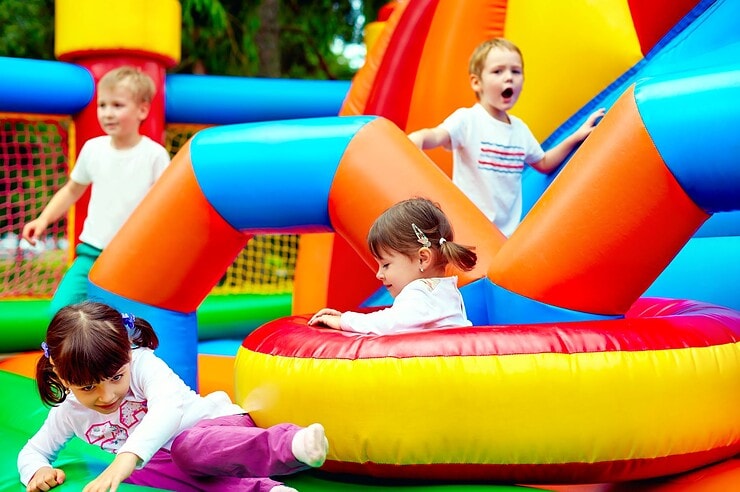
In my work, I’m trying to understand where learning variability comes from. How do children’s experiences influence how and what they learn? Everyday experiences – playing with friends, eating a meal, reading a book, spending time alone – have an impact on development. This is a central pillar of developmental psychology, reflecting the simple assumption that what children experience in their everyday lives critically influences their development. It is therefore surprising that researchers rarely study naturalistic everyday experiences. We need to understand the context in which children develop so that we can intervene in a positive way and provide support.
“Everyday experiences – playing with friends, eating a meal, reading a book, spending time alone – have an impact on development.”
My team and I are developing new methods to gain this understanding. Children in our studies wear little cameras that record their everyday experiences. We record as much as possible to obtain a comprehensive picture and capture children’s perspectives. Since it would be too time-consuming for us to watch and code all the videos that are recorded, however, we rely on machine learning tools to extract relevant information automatically.
Machine learning tools have improved enormously in recent years. They can detect people and recognize language in movies and TV shows, but they still struggle to analyse videos of the real world. My team has spent the last few years adapting these methods to work with the videos we collect from children. We finally feel comfortable using these methods, and I’m very excited about what we will be able to learn, with their help, in the future.
Children’s experiences are diverse
I work primarily in the prototypical context within which scientists have long studied development. The children I study are growing up in a small, affluent university town in the Global North, and our results cannot be generalized to the whole world. We are therefore working with researchers all over the world to determine which aspects of development are specific to a given context, and which are more widespread. Our work is part of a wider project which enables researchers working in many different contexts to study learning variability using similar and comparable methods. We want to do justice to the diversity of experience that exists.
In the long run, we hope to determine which experiences foster learning in which cultural contexts. This will be helpful in designing interventions to support children, both in institutional settings and at home.
We have some early results from analysing the videos. At least in the context in which we study them, children spend a considerable amount of time alone, despite the fact that many theories about development highlight the role of social interaction for learning and development. I don’t know yet what this finding means, but I found it surprising. This has inspired me to dig deeper and try to understand what happens when children are alone and when they are interacting with others.
“We can benefit a great deal from remaining open-minded and observing what children actually do in everyday life.”
I find it fascinating to observe what children are doing, and to see what everyday experiences look like. While researchers like me often assume that we have a good understanding of how and when children learn, we can benefit a great deal from remaining open-minded and observing what children actually do in everyday life.
Author
Partner
Learning Variability Network Exchange
The Learning Variability Network Exchange (LEVANTE) seeks to understand how children grow, learn, and develop across different times, places, and contexts so that they can be supported to thrive in the multitude of experiences they will encounter throughout life. It brings together researchers from around the world to create the first cross-cultural, multidisciplinary open dataset aiming to capture the richness and diversity of child development and learning. By including data collection of common measures on these different areas longitudinally and at a global level, LEVANTE will help researchers, educators, and policy-makers understand learning and developmental variability, thus improving future outcomes for diverse groups of children worldwide.
Footnotes
This article is part of a series in partnership with LEVANTE, the Learning Variability Network Exchange. LEVANTE is a global research network that is improving our understanding of variability through large scale coordinated data collection. Each article features the latest scientific thinking from one of the research sites of LEVANTE. LEVANTE is an initiative of the Jacobs Foundation.